AI-Powered Cybersecurity: Benefits and Risks in 2026
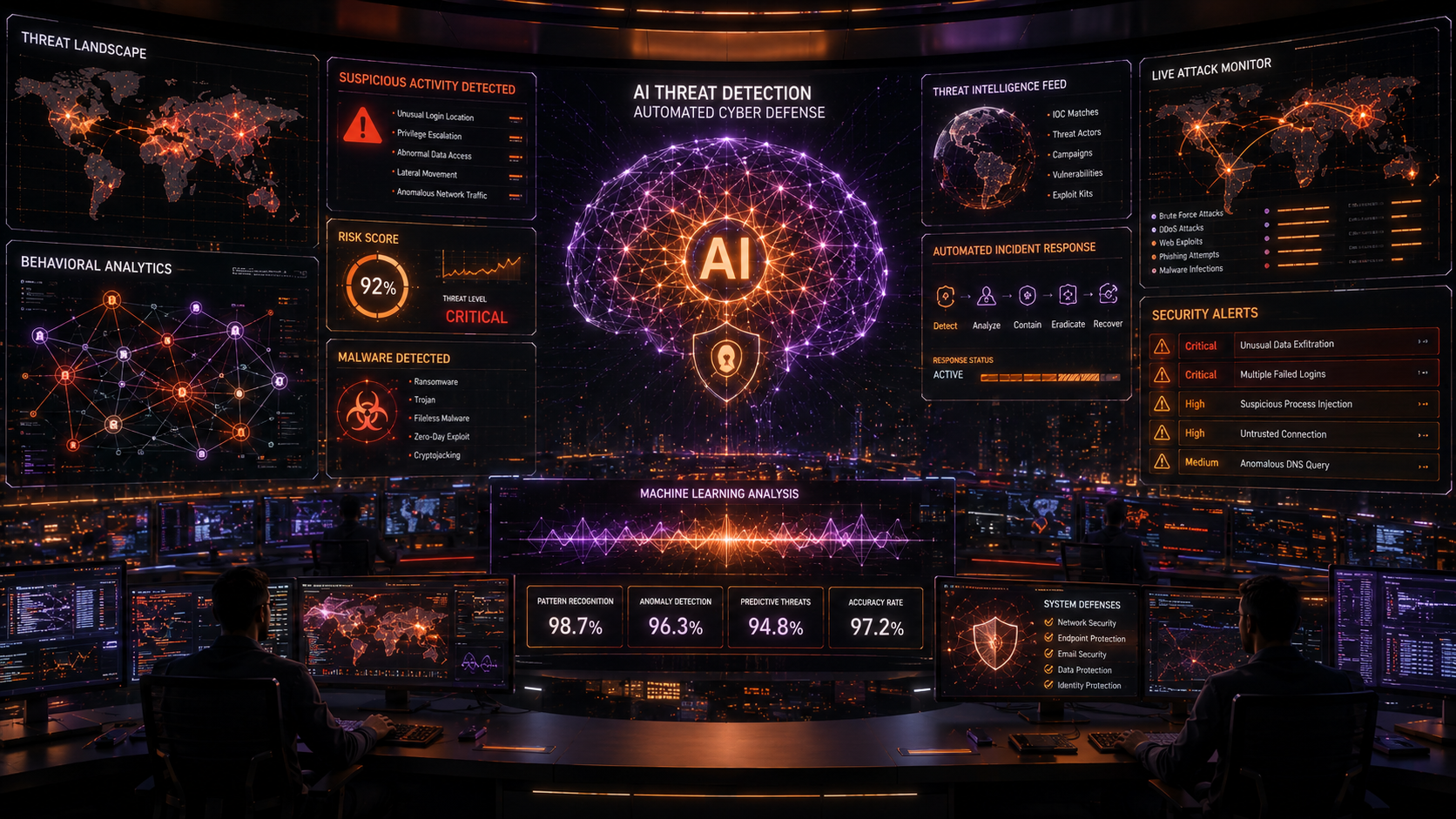
Cybersecurity threats are becoming more sophisticated every year. Businesses, governments, and individuals face increasing risks from ransomware attacks, phishing scams, data breaches, and advanced cybercrime operations. As digital environments become more complex, traditional security methods often struggle to keep pace with evolving threats.
To address these challenges, organizations are increasingly turning to AI-Powered Cybersecurity solutions. Artificial intelligence is helping security teams detect threats faster, automate routine tasks, analyze vast amounts of data, and respond to incidents more efficiently.
However, AI-powered cybersecurity is not without risks. The same technology that strengthens defenses can also be exploited by cybercriminals. Understanding both the advantages and limitations of AI-driven security systems is essential for organizations seeking effective protection in 2026.
This article explores the major benefits and risks of AI-powered cybersecurity and examines its growing role in modern digital security strategies.
What Is AI-Powered Cybersecurity?
AI-powered cybersecurity refers to the use of artificial intelligence, machine learning, and advanced analytics to identify, prevent, and respond to cyber threats.
Unlike traditional security tools that rely heavily on predefined rules, AI systems can learn from data, recognize patterns, and adapt to changing attack techniques.
These systems continuously analyze network activity, user behavior, application performance, and security events to identify suspicious activity.
Core Components
- Machine learning algorithms
- Behavioral analysis
- Threat intelligence platforms
- Automated response systems
- Predictive security analytics
Together, these technologies create more proactive and intelligent security environments.
Why Traditional Security Is No Longer Enough
Cybercriminals now use advanced tools and automation to launch attacks at unprecedented scale.
Security teams face several challenges:
- Massive amounts of security data
- Growing attack surfaces
- Remote work environments
- Cloud infrastructure complexity
- Sophisticated threat actors
Human analysts often struggle to review every security alert manually.
AI-powered cybersecurity helps address this problem by processing information much faster than humans can.
Benefits of AI-Powered Cybersecurity
The growing adoption of AI-Powered Cybersecurity is driven by several significant advantages.
Faster Threat Detection
Artificial intelligence can analyze enormous volumes of data in real time.
Instead of relying solely on manual investigation, AI systems identify unusual activity almost instantly.
Examples include:
- Unauthorized login attempts
- Suspicious file transfers
- Malware behavior
- Network anomalies
Early detection reduces the likelihood of successful attacks.
Improved Threat Prediction
AI systems can identify patterns associated with future attacks.
By analyzing historical incidents and threat intelligence data, organizations can anticipate potential security risks before they occur.
Predictive security capabilities help businesses become more proactive rather than reactive.
Automated Incident Response
Security teams often face thousands of alerts daily.
AI-powered cybersecurity platforms can automatically:
- Block malicious traffic
- Isolate infected devices
- Disable compromised accounts
- Initiate security protocols
Automation reduces response times and minimizes damage.
Reduced Human Workload
Many cybersecurity tasks are repetitive and time-consuming.
Artificial intelligence helps automate:
- Log analysis
- Security monitoring
- Threat classification
- Vulnerability assessment
This allows cybersecurity professionals to focus on strategic activities.
Enhanced Accuracy
Modern machine learning models can identify subtle patterns that may be difficult for humans to detect.
As AI systems learn from new data, their detection capabilities continue improving.
This results in stronger protection against emerging threats.
AI in Threat Intelligence
Threat intelligence involves collecting and analyzing information about cyber threats.
AI-powered cybersecurity platforms can process threat intelligence from multiple sources simultaneously.
Information Sources
- Security databases
- Dark web monitoring
- Threat feeds
- Malware repositories
- Industry reports
Artificial intelligence helps identify relevant insights and prioritize critical threats.
Organizations gain better visibility into the evolving threat landscape.
AI and Behavioral Analytics
One of the most powerful applications of AI-powered cybersecurity is behavioral analysis.
Instead of focusing solely on known threats, AI systems learn normal user behavior patterns.
Examples include:
- Login locations
- Device usage
- Access times
- Application activity
When unusual behavior occurs, security teams receive alerts.
This approach helps identify insider threats, compromised accounts, and advanced attacks.
AI in Malware Detection
Traditional antivirus software relies heavily on known malware signatures.
However, attackers frequently modify malicious code to evade detection.
AI-powered cybersecurity systems analyze behavior rather than signatures alone.
Benefits
- Detection of unknown malware
- Faster identification of threats
- Improved ransomware protection
- Better adaptability
This makes AI particularly effective against modern malware variants.
Risks of AI-Powered Cybersecurity
Despite its benefits, AI-powered cybersecurity also introduces several challenges.
False Positives
AI systems may incorrectly classify legitimate activity as suspicious.
Excessive false alerts can overwhelm security teams and reduce efficiency.
Organizations must carefully tune AI models to maintain accuracy.
Data Quality Issues
Artificial intelligence depends on large amounts of high-quality data.
Incomplete or inaccurate data may reduce effectiveness.
Poor training data can result in flawed security decisions.
Implementation Costs
Deploying advanced AI-powered cybersecurity platforms often requires significant investment.
Costs may include:
- Software licensing
- Infrastructure upgrades
- Training programs
- Security expertise
Small organizations may face budget constraints when adopting AI solutions.
Privacy Concerns
AI systems frequently analyze user behavior and activity.
Organizations must ensure compliance with privacy regulations and ethical standards.
Improper monitoring practices can create legal and reputational risks.
How Cybercriminals Use AI
One of the biggest concerns surrounding AI-powered cybersecurity is that attackers also use artificial intelligence.
AI-Powered Attacks
Cybercriminals leverage AI to:
- Create convincing phishing emails
- Automate reconnaissance
- Generate malware variants
- Launch large-scale attacks
- Develop deepfake content
As defensive technologies improve, offensive capabilities continue evolving as well.
This creates an ongoing cybersecurity arms race.
Industries Benefiting from AI Security
Many industries are adopting AI-powered cybersecurity solutions.
Financial Services
Banks use AI to detect fraud and prevent account compromise.
Healthcare
Healthcare organizations protect sensitive patient information through advanced threat detection.
Retail
Retailers secure payment systems and customer data.
Manufacturing
Industrial facilities use AI to monitor operational technology environments.
Government
Government agencies deploy AI systems to defend critical infrastructure.
These sectors benefit significantly from intelligent security capabilities.
Best Practices for Using AI-Powered Cybersecurity
Organizations should follow several best practices when implementing AI security solutions.
Combine AI with Human Expertise
Artificial intelligence should support security teams rather than replace them.
Continuously Update Models
AI systems must learn from new threats and evolving attack methods.
Monitor Performance
Regular evaluation helps improve detection accuracy.
Protect Training Data
Secure data management is essential for maintaining AI effectiveness.
Maintain Transparency
Organizations should understand how AI-driven decisions are made.
Following these practices improves security outcomes.
The Future of AI-Powered Cybersecurity
The future of AI-Powered Cybersecurity appears promising.
Advances in machine learning, automation, and predictive analytics will continue strengthening digital defenses.
Future developments may include:
- Autonomous threat response
- Advanced behavioral analytics
- Enhanced fraud prevention
- Real-time risk assessment
- Intelligent security orchestration
As cyber threats become more sophisticated, artificial intelligence will play an increasingly important role in cybersecurity strategies worldwide.
Explore cybersecurity best practices from NIST