How AI Is Changing Small Businesses in 2026
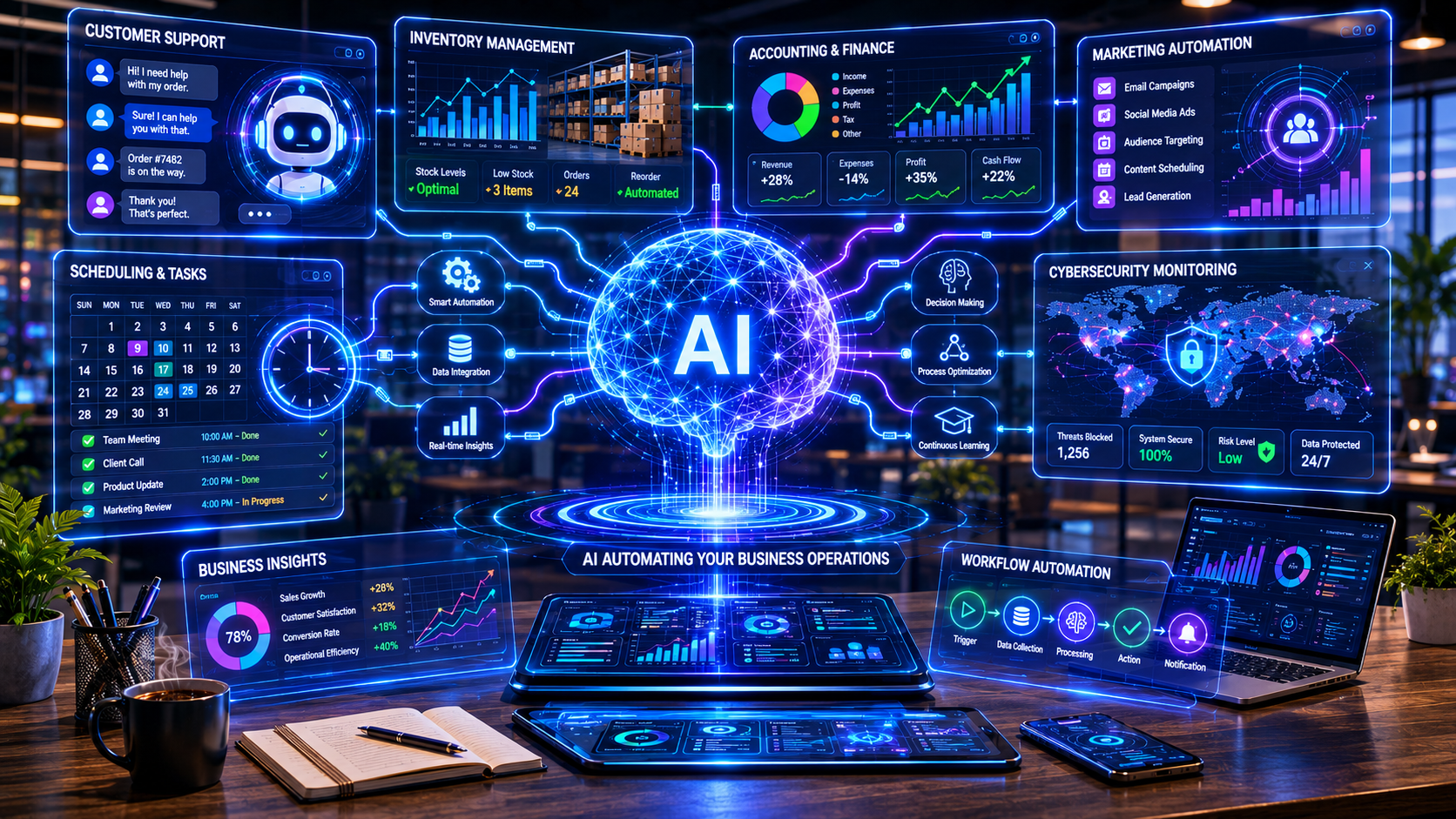
Artificial intelligence is no longer a technology reserved for large corporations. In 2026, AI for small businesses has become more accessible, affordable, and practical than ever before. Small business owners are using artificial intelligence to automate tasks, improve customer experiences, increase efficiency, and compete with larger organizations.
The rapid development of AI tools has created new opportunities for businesses of all sizes. Whether it is managing customer support, creating marketing campaigns, analyzing data, or improving cybersecurity, artificial intelligence is helping small businesses achieve more with fewer resources.
This article explores how AI for small businesses is transforming industries and why business owners should pay attention to this technological shift.
Why Small Businesses Are Adopting AI
For many years, advanced technology solutions were expensive and difficult to implement. Today, cloud-based AI platforms and user-friendly software have changed that reality.
Small businesses are adopting AI because it helps them:
- Reduce operational costs
- Improve productivity
- Save time on repetitive tasks
- Deliver better customer service
- Make smarter business decisions
- Increase revenue opportunities
AI allows business owners to focus on growth and strategy while routine processes are handled automatically.
AI-Powered Customer Support
One of the biggest ways AI for small businesses is creating value is through customer support.
Modern AI chatbots and virtual assistants can answer common questions, provide product information, and assist customers around the clock. This means businesses can offer support even when employees are unavailable.
Benefits of AI Customer Support
- 24/7 availability
- Faster response times
- Reduced workload for staff
- Improved customer satisfaction
- Lower support costs
Customers increasingly expect immediate assistance, and AI helps small businesses meet those expectations without hiring large support teams.
Smarter Marketing with Artificial Intelligence
Marketing has become more data-driven than ever. AI tools help small businesses create effective campaigns based on customer behavior and preferences.
Artificial intelligence can analyze large amounts of data to identify trends and recommend marketing strategies.
AI Marketing Applications
- Email campaign optimization
- Social media content generation
- Customer segmentation
- Personalized advertising
- Predictive analytics
Instead of guessing what customers want, businesses can use AI-generated insights to make informed marketing decisions.
Automating Daily Operations
Many small business owners spend significant time on repetitive administrative tasks. AI automation helps reduce this burden.
Tasks that can be automated include:
- Appointment scheduling
- Invoice generation
- Data entry
- Inventory management
- Payroll processing
- Document organization
By automating routine work, employees can focus on activities that require creativity, problem-solving, and customer interaction.
Better Decision-Making Through Data Analysis
Data is one of the most valuable assets a business can have. However, many small businesses struggle to analyze and interpret information effectively.
AI tools can process large datasets quickly and generate useful insights.
How AI Improves Decision-Making
Artificial intelligence can identify:
- Customer purchasing patterns
- Seasonal demand trends
- Sales opportunities
- Inventory requirements
- Market changes
This allows business owners to make decisions based on facts rather than assumptions.
Businesses that use data effectively often gain a competitive advantage in their markets.
Personalized Customer Experiences
Consumers increasingly expect personalized experiences when interacting with businesses.
AI helps companies understand customer preferences and deliver customized recommendations.
Examples include:
- Product suggestions
- Personalized email content
- Targeted promotions
- Customized website experiences
- Loyalty program optimization
Personalization improves customer satisfaction and increases the likelihood of repeat purchases.
AI in Financial Management
Financial management is another area where AI for small businesses is making a significant impact.
Modern AI-powered accounting software can help track expenses, monitor cash flow, and identify financial trends.
Financial Benefits of AI
- Faster bookkeeping
- Improved forecasting
- Reduced human errors
- Better budget planning
- Fraud detection
Small business owners can gain deeper financial insights while spending less time managing spreadsheets and reports.
Enhancing Cybersecurity with AI
Cybersecurity threats continue to increase in 2026. Small businesses are often targeted because they may have fewer security resources than large enterprises.
AI-powered security systems help detect unusual behavior and respond to threats in real time.
AI Cybersecurity Features
- Threat detection
- Fraud prevention
- Malware identification
- Risk assessment
- Automated security monitoring
These capabilities help businesses protect sensitive customer and company information.
AI and Employee Productivity
Artificial intelligence is not replacing employees. Instead, it is helping workers become more productive.
AI tools assist employees by:
- Summarizing documents
- Drafting emails
- Organizing information
- Managing schedules
- Conducting research
When repetitive tasks are automated, employees can focus on higher-value responsibilities that contribute directly to business growth.
Challenges of Implementing AI
While AI offers many advantages, small businesses should also be aware of potential challenges.
Initial Learning Curve
Employees may require training to effectively use AI-powered tools.
Data Privacy Concerns
Businesses must ensure customer data is handled responsibly and complies with privacy regulations.
Integration Issues
Some companies may need to upgrade existing systems before implementing advanced AI solutions.
Cost Considerations
Although AI has become more affordable, businesses should evaluate potential returns before investing in new technologies.
Proper planning helps maximize the benefits of artificial intelligence while minimizing risks.
Industries Benefiting from AI
AI for small businesses is impacting nearly every industry.
Retail
Retailers use AI for inventory management, customer recommendations, and sales forecasting.
Healthcare
Small healthcare providers use AI to improve scheduling, patient communication, and administrative efficiency.
Hospitality
Hotels and restaurants use AI to enhance customer service and optimize operations.
Professional Services
Consultants, agencies, and legal firms use AI to automate research, document preparation, and communication.
E-Commerce
Online businesses rely on AI for product recommendations, marketing automation, and customer support.
The Future of AI for Small Businesses
The future of AI for small businesses looks promising. As technology continues to evolve, AI tools will become even more affordable and easier to use.
Future developments may include:
- More advanced AI agents
- Improved automation capabilities
- Better predictive analytics
- Enhanced personalization
- Stronger cybersecurity solutions
Businesses that adopt artificial intelligence early will likely gain significant advantages over competitors that delay implementation.
Learn more about Artificial Intelligence solutions from Microsoft